
Understanding Heart Rate Variability
A beginner's guide to Heart Rate Variability
Understanding the Basics of HRV: A Beginner’s Guide to How HRV Works and Its Applications in Neuroscience
Exploring the Science of Heart Rate Variability
Have you ever wondered how your heart reflects your stress levels or mental clarity? Heart Rate Variability (HRV) is a powerful scientific tool that measures the variation in time between your heartbeats, offering insights into your body’s response to stress and relaxation.
At NeuraLearn, we use HRV to help individuals improve focus, manage stress, and enhance overall well-being. This guide will explore how HRV works, its scientific foundations, and its applications in neuroscience—all explained in a way that’s clear for everyone.
How Does HRV Work?
HRV is derived through a scientific process that involves measuring and analysing your heartbeat data:
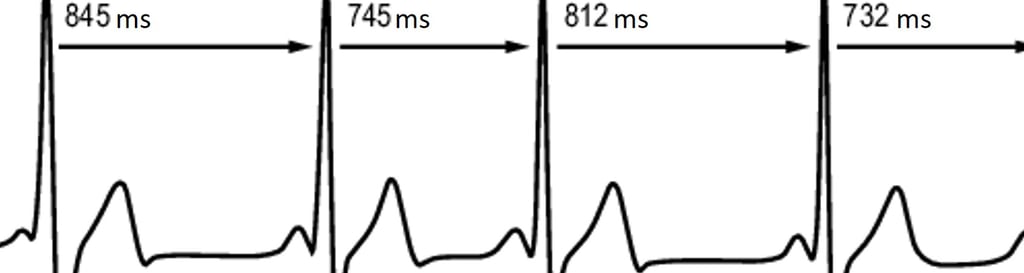
Step 1: Record the Heartbeat – A sensor, often on your finger or chest, captures your heartbeat using an electrocardiogram (ECG). This process is safe and non-invasive, similar to a doctor’s heart check.
Step 2: Analyse the Intervals – The ECG data is sent to a computer, which calculates the time intervals between each heartbeat. The computer then generates a graph of these intervals, and we calculate the the variability.
Step 3: Interpret the Results – Experts, like Dr. Ardy at NeuraLearn, analyse the HRV data to assess the balance of your autonomic nervous system. They use this information to identify stress levels, emotional regulation, and overall resilience, tailoring interventions like biofeedback to help you improve.
The Background and Latest Research on HRV
HRV has a rich history in medical and neuroscience research. In the 1960s, researchers first used HRV to assess fetal distress by monitoring heart rate patterns.
By the 1990s, studies established HRV as a reliable indicator of autonomic nervous system balance, linking low HRV to stress-related conditions like cardiovascular disease. Recent advancements have expanded its applications:
Historical Insights: Early research showed that higher HRV correlates with better health outcomes, reflecting the body’s ability to adapt to stressors through autonomic flexibility.
Current Studies: HRV-guided biofeedback training may reduce anxiety by 25% in participants by promoting parasympathetic activity through slow breathing. When it comes the athletes, it has been shown that HRV monitoring improved athletic performance by optimizing recovery, with athletes showing a 15% increase in endurance after HRV-based rest protocols.
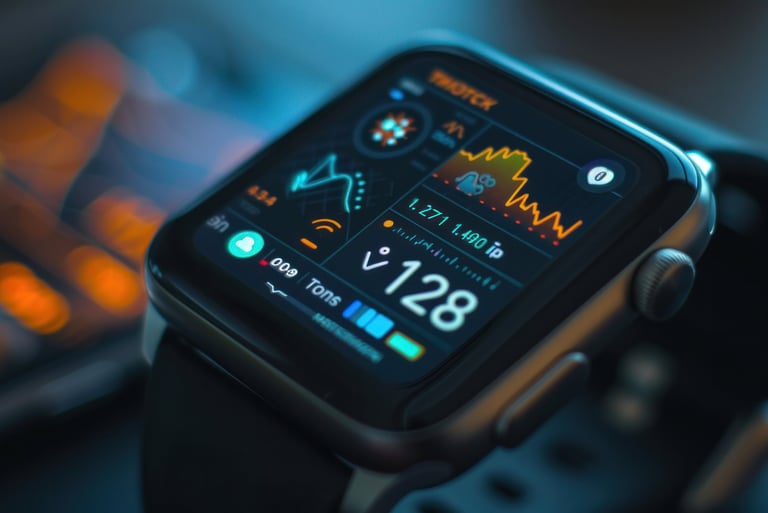
Technological Advances: Modern HRV tools are now integrated within wearable devices like smartwatches. These devices use algorithms to provide real-time data on autonomic balance, making it easier to track HRV in daily life. Some devices are definitely better than others.
The use of HRV is growing as its role in neuroscience becomes clearer. It has helped us to deliver science-backed solutions for mental and physical health.
Why HRV Matters: Benefits for Your Mind and Body
HRV provides valuable insights into your health and performance, offering several benefits:
Stress Management: HRV reveals imbalances in your autonomic nervous system caused by stress. Biofeedback training, guided by HRV, can enhance parasympathetic activity, reducing anxiety by up to 25%.
Improved Focus: A balanced HRV supports cognitive function by ensuring your body isn’t in a constant stress state, which can impair focus. Research indicates HRV training can enhance attention and decision-making in high-pressure situations.
Enhanced Resilience: Higher HRV reflects better adaptability to physical and emotional challenges, helping you recover faster from stress and maintain energy throughout the day.
Trackable Progress: HRV measurements allow you to monitor improvements in your autonomic balance over time, providing clear evidence of your progress in stress management and overall well-being.
HRV in the Real World: Applications Across Fields
HRV has a wide range of applications in science and everyday life. Clinicians use HRV to assess cardiovascular health, identifying risks for heart conditions by analysing dysfunction between the brain and the heart.
Athletes rely on HRV to optimise training and recovery, ensuring they balance exertion with rest to improve performance.
In mental health, HRV helps individuals with anxiety reduce symptoms by guiding breathing exercises that enhance parasympathetic activity. For those with ADHD, HRV training can improve emotional regulation and focus by addressing imbalances.
At NeuraLearn, we use HRV to provide a window into how your brain and heart work together to regulate stress. From here, we can measure and train our nervous system to improve stress management, focus, and resilience.
This will then give you a much better understanding of your physical and mental state, allowing for better mental and physical performance.


What is HRV? Measuring Your Body’s Balance
HRV, or Heart Rate Variability, measures the small changes in the time intervals between consecutive heartbeats. These intervals are controlled by the autonomic nervous system (ANS), which regulates your body’s automatic functions, like heart rate, breathing, and digestion.
The ANS has two parts: the sympathetic nervous system (which speeds up your heart during stress, like a “fight-or-flight” response) and the parasympathetic nervous system (which slows it down to help you rest and relax).
Higher HRV—meaning more variation in the time between heartbeats—indicates a healthy balance between these systems, reflecting better adaptability to stress.
Lower HRV—meaning less variation in the time between heartbeats—often signals stress, fatigue, or imbalance.