
Understanding EEG Basics
A beginner's guide to the Electroencephalogram (EEG)
Exploring Your Brain's Hidden Electrical World
Have you ever wondered what happens inside your brain when you concentrate hard, relax deeply, or feel a burst of creativity?
Welcome to the world of EEG, or Electroencephalography—a remarkable scientific tool that captures the tiny electrical signals your brain creates. Developed over a century ago, EEG has become a cornerstone of neuroscience, allowing us to study how the brain works.
At NeuraLearn, we use EEG to help people discover and improve their mental abilities. This guide will take you on a journey through EEG’s history, how it works, and the exciting research shaping its future—explained simply yet with the depth of science!
What is an EEG? A Window into Brain Activity
Your brain is a busy place, filled with special cells called neurons. These neurons talk to each other using electrical and chemical signals.
An EEG acts like a gentle listener, using small sensors placed on your scalp to record these electrical signals. First discovered in the 1920s by German scientist Hans Berger, EEG measures brain waves—patterns of activity that tell us what your mind is doing. These waves come in different types:




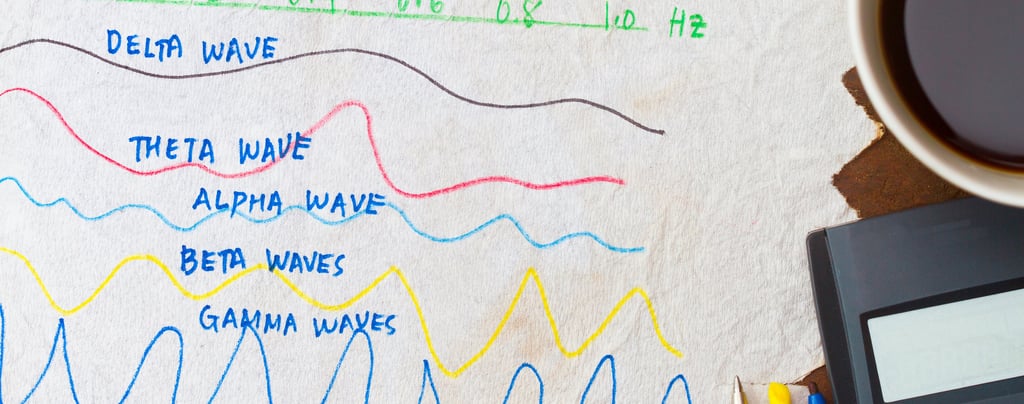
Delta waves (slow, for deep sleep).
Theta waves (linked to creativity and rest).
Alpha waves (seen when you’re calm or resting with eyes closed).
Beta waves (active during focus and problem-solving).
Gamma waves (tied to high-level thinking and memory).
Recent studies show EEG can spot these waves with amazing detail, helping us understand the brain better than ever before.
How Does An EEG Work? A Scientific Three-Step Process
EEG turns brain signals into useful information through a careful process:
Step 1: Placement – A soft headset with electrodes (small sensors) is placed on your scalp. These electrodes pick up the brain’s electrical activity without any pain.
Step 2: Recording – The electrodes send signals to a computer, which turns them into waves that we can view.
Step 3: Analysis – Scientists and experts, like Dr. Ardy and his team, study these waves. They then use a neurofeedback to help your brain learn to focus or relax, based on the patterns they see.
EEG’s roots trace back to Berger’s early experiments, but today’s research enhances it with computers and artificial intelligence to make the pictures even smarter.
At NeuraLearn, we use this science to make your brain stronger, tailored just for you!
The Background and Latest Research on EEG
The EEG has a rich history and exciting new developments. Scientists have learned that an EEG is great because it’s safe, uses no needles, and catches brain changes in milliseconds—faster than many other tools like MRI. Recent journal studies highlight its growth:
Early Discoveries: Berger found alpha waves in healthy people, linking them to relaxation. This opened the door to studying brain health.
Modern Advances: Research now uses EEG with machine learning to predict focus levels or detect conditions like epilepsy. Recent studies have also explored how EEG combined with deep learning improves brain-computer interfaces for better control of devices.
New Applications: Scientists are testing EEG in real-world settings, like tracking attention during work or sports, thanks to portable devices that work outside labs.
This progress shows EEG is more than an old tool—it’s a growing science helping people every day.
Why EEG Helps: Proven Benefits for You
EEG is a powerful tool backed by science to improve your mind. Here’s how:
Enhanced Focus: EEG tracks beta waves, the focus signal. Studies show neurofeedback can boost attention by up to 30% in weeks, perfect for work or learning.
Creative Boost: Theta waves fuel new ideas. Research links EEG-guided training to better problem-solving, helping you think big.
Stress Relief: When stress spikes, EEG spots it and guides you to calm with neurofeedback, reducing anxiety by 25% in some cases.
Measurable Growth: EEG monitors your progress. Recent data from cognitive studies confirm it tracks brain changes, showing real improvements.
EEG in the Real World: A Tool for All
EEG does amazing work beyond labs! Doctors use it to find epilepsy by watching for odd brain waves. Scientists study how meditation boosts alpha waves for peace. Athletes use EEG to sharpen focus during games.
Artists tap theta waves for new art. Businesses even use it to see how people react to ads. EEG also helps with mental health challenges like ADHD and anxiety. For ADHD, EEG spots patterns like higher theta waves and lower beta waves, which can show why focus is hard—researchers use this to improve attention.
For anxiety, EEG neurofeedback helps people learn to manipulate their brain waves to help reduce the effect of stress and anxiety.
Why EEG Shines at NeuraLearn
EEG is a key to unlocking your mind’s potential, built on a century of science and boosted by today’s research. We use it to understand your brain’s unique patterns, helping you focus better, create more, and stay calm.
Ready to explore what EEG can do for you? Join NeuraLearn and let your brain’s power grow!